
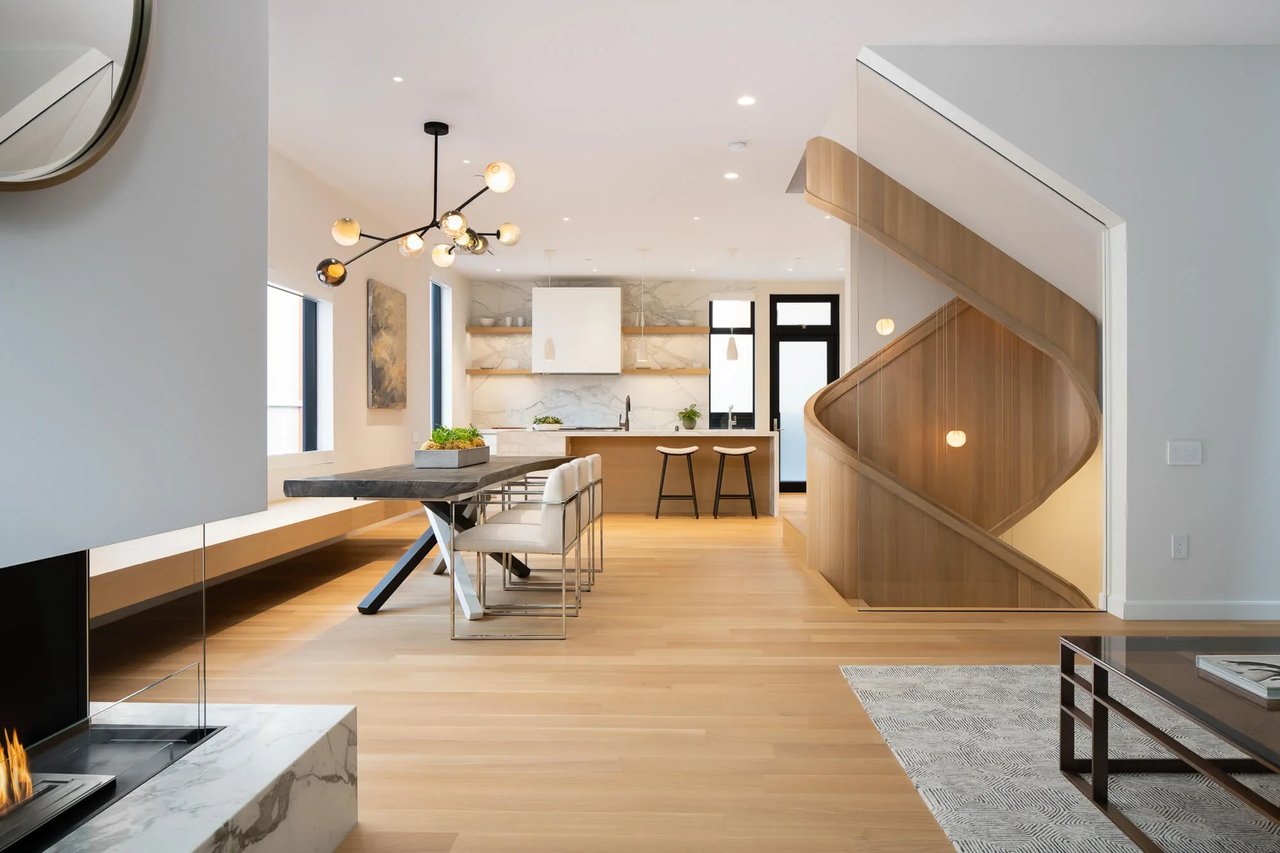
The most important space planning work happens before any design gets drawn. It involves observing and understanding how the household actually uses the existing space — not how the original architect intended it to be used, but how real people with real habits move through it every day.
Which direction does everyone walk when they come in from the garage? Where does mail and backpack clutter naturally accumulate? Which counter does the household gravitate toward for meal prep? Where does natural light fall in the morning versus the afternoon? These behavioral patterns are the raw material that good space planning works from.
Golden Age Builders starts every residential remodeling conversation by understanding how the household currently lives — because the best layouts solve real problems rather than simply rearranging what already exists.
The kitchen work triangle — the relationship between the sink, the refrigerator, and the cooking surface — has been a foundational concept in kitchen planning for decades. The underlying idea is still valid even as kitchen designs have become more complex: the most-used points in the kitchen should be positioned so that moving between them is efficient and unobstructed.
In larger or more open kitchen designs, the work triangle has evolved into a work zone concept where prep, cooking, cleaning, and storage each occupy a defined area. A separate prep zone with its own sink, a dedicated baking station, or a coffee bar positioned away from the main cooking area all reduce traffic conflicts when multiple people are in the kitchen at the same time.
The distance between key work points matters as much as their relative positions. A kitchen where the refrigerator is too far from the prep counter, or where the path from the stove to the sink crosses the main traffic aisle, creates friction in every meal preparation.
One of the most common space planning errors in residential remodeling is underestimating how much clear space moving bodies actually need. A kitchen aisle that looks generous on a floor plan can feel cramped when two people are trying to pass each other while one has the oven door open.
Minimum clearances are not arbitrary numbers — they reflect real human dimensions and movement patterns. Kitchen work aisles should be at least 42 inches wide for a single cook and 48 inches for households where two people regularly cook together. Bathroom clearances in front of toilets, vanities, and shower entries all have minimums that affect how comfortable and functional the room feels in daily use.
Furniture placement in living and dining rooms also needs to account for traffic lanes. A path of at least 36 inches between furniture groupings allows comfortable movement without the room feeling like an obstacle course.
Natural light is one of the most powerful tools in space planning and one of the most commonly overlooked. A room that receives good natural light feels larger, more welcoming, and more comfortable than a room of identical dimensions that is poorly lit. Remodeling projects that change the layout of a home — removing walls, adding rooms, reconfiguring openings — always need to account for how those changes affect light distribution.
South-facing windows bring consistent light throughout the day. East-facing windows deliver bright morning light that works well in kitchens and breakfast areas. West-facing windows bring warm afternoon sun that can overheat rooms without proper shading. North-facing windows provide soft, even, indirect light that works beautifully in living areas and home offices.
Adding a skylight or solar tube in a room that cannot gain a new exterior window is often the most practical way to introduce natural light into a space that would otherwise remain dark regardless of what finishes are used.
Storage is one of the areas where space planning most directly affects daily quality of life. When storage is inadequate or poorly positioned, belongings end up on counters, floors, and surfaces throughout the home — creating visual clutter that makes even beautifully finished spaces feel chaotic.
Good storage planning is not about adding more closets everywhere. It is about positioning storage where things naturally need to be put away. Coat hooks and shoe storage near the entry, pot and pan storage adjacent to the cooking surface, linen storage near the bathrooms that use it — storage that is convenient to where things are used actually gets used.
Searching for a bathroom remodel contractor who thinks about storage function alongside aesthetic choices produces bathrooms that remain organized and comfortable years after the renovation rather than becoming cluttered within months.
The proportions of a room — its length-to-width ratio and its ceiling height — have a significant effect on how the space feels without being immediately obvious to most homeowners. A long, narrow room with a standard eight-foot ceiling can feel like a corridor regardless of how it is furnished. A square room with a vaulted ceiling feels open and comfortable at a fraction of the square footage.
Remodeling projects that include ceiling work — removing a dropped ceiling to expose height above, vaulting a flat ceiling along a roofline, or adding a tray ceiling detail — can dramatically change the perceived size and comfort of a room without changing its floor plan dimensions at all.
Proportion also affects furniture selection and arrangement. A space planning decision that does not account for furniture scale — choosing a layout that cannot accommodate a dining table large enough for the household, for example — creates problems that only become apparent after the renovation is complete.
Rooms do not exist in isolation — they are experienced in relation to the spaces next to them, the views between them, and the transitions from one to another. Space planning that considers each room individually without thinking about these relationships misses half of what makes a home feel well-designed.
The transition from the entry to the main living area sets the tone for the whole home. The sightline from the kitchen to the backyard determines how connected the cook feels to outdoor activity. The proximity of the primary bedroom to the main bathroom affects the morning routine for everyone in the household.
For families navigating these decisions as part of a larger renovation, exploring the design build process early helps ensure that space planning decisions are made with the full picture in mind rather than room by room in isolation.
Open-plan living became the dominant residential design preference over the past two decades, and for good reason — it creates light, connection, and a sense of spaciousness that compartmentalized floor plans cannot match. But pure open plan has its own challenges, particularly for households with multiple generations, multiple work-from-home users, or simply people who need quiet at different times of day.
The best space planning solutions for most households today are not fully open or fully compartmentalized — they are thoughtfully in between. A kitchen and dining area that flows openly into the living room, with a study or home office that has a door, gives the household both the connection of open plan and the retreat of a defined private space.
Half-walls, built-in bookshelves, level changes, and ceiling definition are all tools that create a sense of zone and separation within an open plan without putting up walls that close the space off entirely.
Homeowners sometimes feel impatient with the time spent on planning before anything physical gets built. The material selections, the tile samples, the cabinet door profiles — those feel like the real decisions. Space planning can feel abstract and slow by comparison.
But the investment in careful space planning is returned many times over in the finished result. A well-planned layout that works naturally with how the household lives requires less effort to keep organized, feels more comfortable day to day, and holds its appeal over years rather than months.
The decisions made in the planning phase are also the most expensive to reverse once construction begins. Moving a wall, relocating a door, or shifting a plumbing stack after framing is underway costs many times what it would have cost to make the same decision on paper. Time spent planning is time that prevents costly changes later.
Golden Age Construction, operating from 2211 E Orangewood Ave UNIT 586, Anaheim, CA 92806, provides comprehensive general contracting services throughout Orange County, including kitchen remodels, bathroom renovations, ADU construction, room additions, roofing, flooring, exterior design, painting, window and door installation, and 3D rendering visualization. Licensed (#1040171), bonded, and insured, the team has earned a 5.0-star rating (3 reviews) by consistently delivering projects on time and on budget with transparent communication from start to finish.
Serving homeowners from Fullerton to San Juan Capistrano and every community in between, their skilled renovation contractors are available seven days a week and can be contacted at (949) 250-9669.
Name: Golden Age Construction
Address: 2211 E Orangewood Ave UNIT 586, Anaheim, CA 92806
Phone: (949) 250-9669
Website: https://www.newgoldenagebuilders.com/orange-county/